
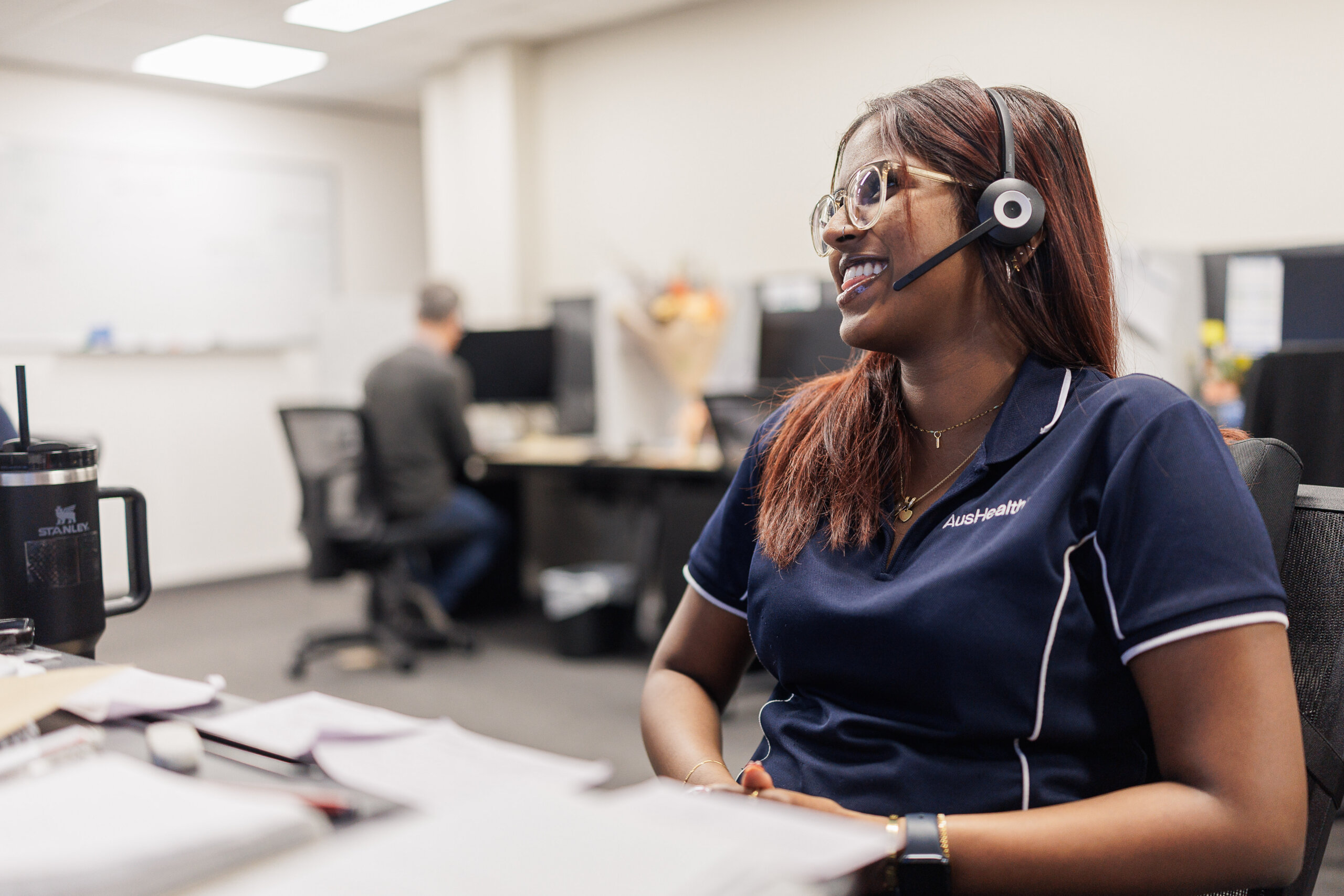
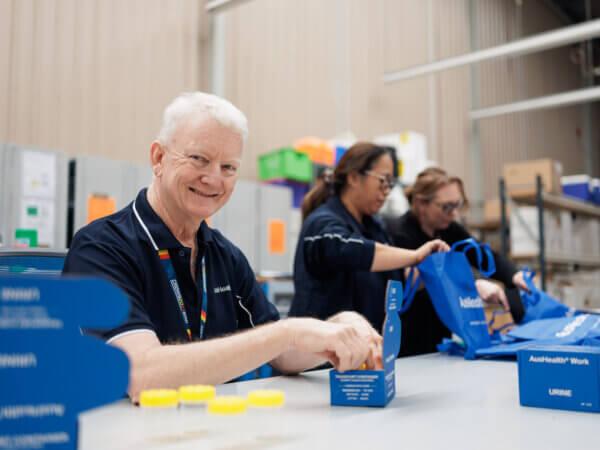
AusHealth is a medical research charity that has contributed more than $50 million to Australian-led research in disease therapies, AI-powered clinical solutions and novel healthcare technologies. The charity’s proceeds also help to run and finance the Accelerator, a research translation hub in Adelaide where entrepreneurs and innovators collaborate on the health tech of tomorrow.
The organisation is entirely self-funded through its three commercial arms, which operate nationally. AusHealth Hospitals delivers revenue management services to the healthcare sector; AusHealth Diagnostics is Australia’s largest provider of workplace drug and alcohol testing; and AusHealth Clinical Coding and Health Information Management Services provides complete and accurate diagnostic and procedure codes for all inpatient episodes of care.
“To support our divisions we have a huge contact centre with about 100 agents operating across our offices in Adelaide, Brisbane and Melbourne. Our agents are regularly contacted throughout the workday by hospitals, insurers and individual patients. That could be anything from helping someone organise a payment plan on a debt, liaising with an insurer to submit a claim, dealing with an incident where someone has crashed a forklift, or organising a drug and alcohol test,” said Brad Allison, IT Manager, AusHealth.
Limited legacy contact centre capabilities
AusHealth’s contact centre was operating with a hosted telephony solution that only offered rudimentary capabilities for call recording and reporting. There was no integration with any other applications being used, which meant agents had to toggle between three separate systems during most calls. That included an app for call recordings and compliance that would time out every 10-15 minutes.
“Working across both financial services and healthcare, there is a very extensive compliance framework we have to operate under. However, our legacy system’s relatively unsophisticated reporting and call recording made that a management burden,” said Allison.
The system’s unsophisticated softphone client also meant that AusHealth agents had to rely on deskphones, adding to the complexity of their working environment.
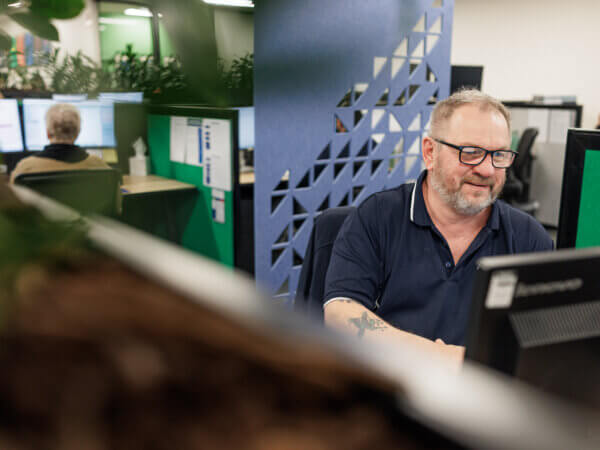
Double the features at a lower cost
In collaboration with IT, compliance staff and the operations managers of each contact centre division, AusHealth went to market with a list of key requirements for a new solution.
“Over the course of a year we sat down with seven different vendors, and you’d only get three out of the five options with each of them,” said Allison.
Comunet, one of AusHealth’s biggest IT partners providing services and support for its Microsoft, networking and DR environments, recommended an integrated RingCentral RingEX UCaaS and RingCX CCaaS platform as the ideal solution. As one of just two vendors to meet all of AusHealth’s requirements, RingCentral was easily the more cost-effective solution.
Initially only the contact centre upgrade was in scope, but it quickly became clear to AusHealth that there were benefits in upgrading its telephony platform as well.
“During the discovery and design meetings we had with Comunet and RingCentral, we realised we could replace all our deskphones and consolidate our entire telephony onto RingCentral with double the contact centre features – all at a cheaper overall cost to run it,” said Allison.
A 15-minute cutover
In preparation to go-live, AusHealth worked with RingCentral Professional Services and Comunet to design call queues, IVRs and number plans, and meet all the specific functional requirements, roles and responsibilities of each contact centre division. The transition was rendered seamless by two weeks of user training (including follow-up videos and documentation), UAT sessions and other system testing.
“We started the cutover on the 11th of February at 7:30 in the morning and we were on the new RingCentral system taking calls by 7:45am. It was the biggest change that I’ve facilitated in my IT career, and it was smoother than I could have ever predicted,” said Allison. “Also, in the first week after go-live with RingCentral, we had fewer support tickets raised than we were getting on an average day with the old system.”
Those new tickets have typically been from staff asking about the location of a particular function or feature, rather than a fault or problem. RingCentral’s biggest user benefit is consolidating the agent’s experience into a single application, whereas previously they had to operate from three separate windows.
Comunet has been instrumental in ensuring the ongoing success of the RingCentral implementation, says Allison. “Comunet has been closely involved in the project from start to finish for us. They have checked in regularly to make sure everything is running smoothly, to find out if there is anything we need or if anything needs escalating.”
Upgrading to RingCentral has also fundamentally simplified administration. Previously AusHealth’s IT team had to manually add users to each system separately, and agents had to remember three additional username and password combinations in addition to their main corporate logins – with glitches sometimes causing user access issues to specific applications.
Now, with RingCentral integrated with Microsoft Entra ID, when users are added to RingCentral, single sign-on using MFA automatically gives them access to all the services and applications they need. AusHealth is also in the process of integrating RingCentral with its Zoho CRM and ticketing system and with its revenue collections platform to further streamline operations.
“RingCentral is almost hands-free management from an IT standpoint. It’s brilliant for us,” said Allison.

Creating greater flexibility and visibility
The RingCentral mobile app has been a game changer for AusHealth’s patient liaison officers, diagnostics team, and drug and alcohol testing services collectors. The nature of the work requires a 24/7 roster, with staff working out in the field or on call after hours. With the RingCentral app on their personal mobile devices, on-call staff aren’t tied to a desk or specific location and can go about their normal lives and still respond to any urgent calls coming in, whenever or wherever.
RingCentral Analytics is providing AusHealth with real-time visibility they have never had before, including team performance metrics like answering rates per agent and call volumes and trends to assist with more accurate workforce management. This also facilitates AusHealth’s flexible working arrangements.

AI-empowered compliance
RingCentral’s call recording and transcription services are making it much more efficient for AusHealth’s compliance team to ensure agents are meeting the organisation's extensive obligations, particularly with regards to patient confidentiality and privacy, and debt reconciliation and PCI-DSS security requirements.
To help automate and streamline the process, AusHealth has turned on RingCentral AI Conversation Expert (ACE) to analyse every recorded interaction for insights that improve coaching, quality, and performance across the organisation.
AusHealth is currently configuring the automated scorecards it requires for RingCentral ACE to assist in the compliance review process, but the early signs are good, says Allison.
“RingCentral ACE is looking very promising as a tool to carry out compliance checks for us and has made a huge change already for our individual team leads to monitor the general quality of the calls."
“As a perfect example, RingCentral ACE is helping our team with soft skills. The system flagged multiple calls with a contact centre agent who does urgent roadside post-incident testing talking at 250-260 words per minute. We’re utilising insights like that to coach our staff that it’s better to take their time, stay calm and be thorough,” said Allison.
About Comunet
For over 30 years Comunet has been designing and implementing IT strategies that leverage technology to achieve business objectives for small businesses, through to enterprise organisations. With expertise across all areas of IT including strategic consulting, cloud technology, cyber security, and software, we help clients on their digital transformation journey. Through our partnerships with leading global vendors, we deliver the best technology solutions effectively and efficiently.
To learn more about how Comunet can assist your organisation with your digital transformation, please contact us.