
Blogs By this
author
- No post found
Related blogs
to this blog
This year's DDD theme was "Trusted Autonomy". It was a great summary of where our industry is right now. AI tools are no longer just answering questions but starting to take actions on their own. The question is how much we can trust them, and what happens when they get it wrong.
There were plenty of excellent technical sessions across the day. But the ones our team kept coming back to weren't really about technology at all. They were about people.
When an agent gets it wrong, who answers?
Kesha Williams, Head of AI at Keysoft, was the main speaker at DDD and also spoke at the AWS fireside chat. Her DDD session, "When Agents Act, Who Answers?", asked a deceptively simple question: when an AI agent acts on its own and something goes wrong, who’s accountable?
Her point was that governance built for human-written code doesn't automatically transfer to agents. In traditional software, a person wrote the logic, a person approved it and a person answers for it. With agents, those lines blur, therefore, accountability must be considered from the start.
This really resonated with us. At Comunet, we build AI into custom software for clients, and our own developers have used AI tools daily since 2024. Our rule is simple: there's always a human in the loop, and before anything goes live, everyone knows who makes the call when it matters. Kesha's session was a good reminder that this is a design decision, not something you can bolt on later.
The human side of AI
Two other sessions stood out, and both were about what AI is doing to the people using it.
Tanya Hallett, Founder and CEO of TIPT, spoke on psychological safety in uncertain times. Restructures, AI-driven change and plain fatigue are testing teams everywhere, including in tech. Her most useful observation was about the gap between what leaders think they're communicating and what their teams are actually hearing. When people are anxious about their jobs, silence usually gets filled with the worst possible story.
Dunja Lewis, Chief Innovation Officer at AIUC Global, took on a more confronting topic: employees using AI for validation, companionship and even as a stand-in therapist or mentor. Her session title used the phrase "AI-induced psychosis". That isn't a clinical diagnosis, and she framed it as an emerging risk rather than a settled one. But the underlying concern is real. Tools with memory and a friendly persona can reinforce what people already believe and build emotional dependence, and most organisations haven't yet thought about where their responsibility starts.
One idea from the day stuck with our whole team: be careful about giving your AI assistant a name, a gender or a personality. The more human it feels, the easier it is to overshare, over-rely and forget it's a machine.
What we recommend for WA leaders
None of this needs a new framework. A few habits go a long way:
1. Decide who answers before you deploy. For every AI tool or agent, name the person accountable for its decisions.
2. Keep a human in the loop. Make checking AI output a normal part of the job, not a sign of distrust.
3. Talk about AI as a tool. How leaders describe it shapes how teams treat it.
4. Say what you know, and what you don't. In uncertain times, honest updates beat confident silence.
5. Notice over-reliance. If someone can't do a task without an assistant any more, that's worth a gentle conversation.
Why Comunet is in Perth
Comunet has been helping Australian organisations with technology for more than 30 years from Adelaide. Our Perth team is newer, and it's growing faster than we planned. We outgrew our first office within weeks of opening!
We attend events like DDD Perth and the AWS User Group because we love being part of the WA technology community. Our Perth team works with WA government agencies, councils and larger organisations on:
- Cloud: planning, migrating and securely running workloads on AWS and Azure
- Data and AI: as a Snowflake Select Tier partner, bringing scattered data into one place so leaders can ask questions of it directly
- Custom software: building systems for problems nothing off the shelf solves
- Microsoft Modern Workplace: setting up Microsoft 365, Teams and Copilot so your people can work securely from anywhere
- Cyber security and managed IT: backed by our ISO 27001 certified team in Adelaide
If you're working out how AI fits safely into your organisation, or you were at DDD Perth and have a session that stuck with you, chat to our Perth team. We'd love to hear it.
Questions we get asked
What does "trusted autonomy" mean in AI? Trusted autonomy is the idea that AI agents can act on their own only within limits people have set and can check. It was the theme of DDD Perth 2026. In practice it means clear guardrails, a human able to step in, and named accountability for what the agent does.
Who is accountable when an AI agent makes a mistake? The organisation that deploys it, through the people it names as responsible. Governance designed for human-written code doesn't cover agents well, so accountability should be assigned before an agent goes live, with a human able to make the final call on high-stakes decisions.
Should employees use AI as a confidant or therapist? It's a growing workplace risk. Some staff use AI for validation, companionship or emotional support, and tools with memory and a friendly persona can encourage dependence. Organisations should set expectations, keep AI framed as a tool, and point people to real support services.
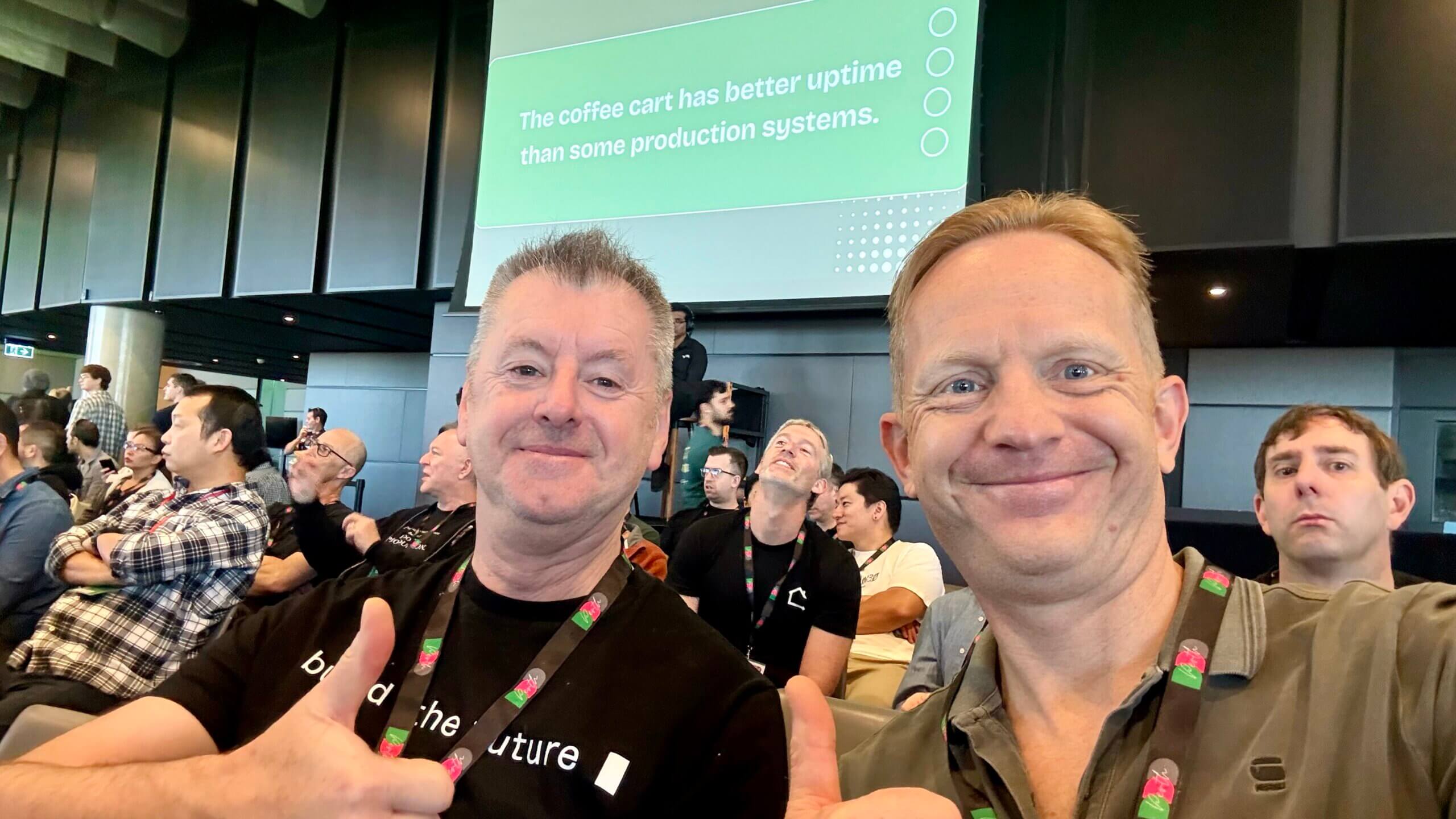
What is DDD Perth? DDD Perth is an inclusive, not-for-profit conference for the Perth software community. The 2026 event was held on Saturday 3 October at Optus Stadium with the theme "Trusted Autonomy". Comunet's Tony O'Grady, Yuri Baan and Jaydeep Gami attended.
Does Comunet have an office in Perth? Yes. Comunet has a Perth office at 221 St George Terrace, Perth, WA, 6000 alongside its Adelaide head office. The Perth team works with WA government agencies, councils and larger organisations on AWS cloud, data and AI, custom software and cyber security.